
If you are unexpectedly pregnant or you think you might be, it is important to know what is an ectopic pregnancy. Let’s examine what an ectopic pregnancy is, the symptoms, and why an ultrasound is important.
(Please note, no content of this article is intended to be a substitute for professional medical advice, diagnosis, or treatment. Always seek the advice of your physician or qualified health care provider with any questions you may have regarding a medical condition or treatment.)
What happens in an Ectopic Pregnancy?
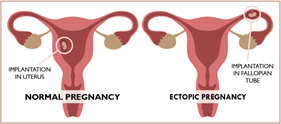
The word “ectopic” literally means out of place. An ectopic pregnancy occurs when the fertilized embryo implants somewhere other than inside your uterus. About 1 in 50 pregnancies are ectopic and the frequency of ectopic pregnancies has been increasing in recent years.
The most common type of ectopic pregnancy is called a tubal pregnancy, where the pregnancy implants inside the fallopian tube. The Mayo Clinic also notes other types of ectopic pregnancy which implant in other areas, such as the ovary, abdominal cavity, or the lower uterus.
Why is an Ectopic Pregnancy a Medical Emergency?
The normal location for a pregnancy is inside the walls of your uterus, which can accommodate a growing pregnancy. Because your pregnancy will grow in size, if your pregnancy is attached somewhere other than inside the uterus, like in a fallopian tube, there is a risk of rupture and internal bleeding.
If left untreated, an ectopic pregnancy can be serious or fatal.
Suspected ectopic pregnancies may be detected with an ultrasound. It’s important for any pregnancy that you have an ultrasound to confirm the pregnancy location.
What causes ectopic pregnancy?
There is no single cause for an ectopic pregnancy. However, a study in the International Journal of Gynecology and Obstetrics identified several risk factors associated with ectopic pregnancy, including:
- Previous ectopic pregnancy
- Pelvic inflammatory disease
- Infertility
- Abdominal or pelvic surgeries
- Previous tubal ligation
- Advanced maternal age
- Smoking
- More than one sexual partner
- Previous use of emergency contraception
- Use of Intrauterine device (IUD)
What are signs and symptoms that my pregnancy is ectopic?
The American Pregnancy Association and the Cleveland Clinic list several potential symptoms of ectopic pregnancy. Immediately go to the nearest emergency room if you experience any of the following symptoms while pregnant:
- Intermittent or persistent sharp or stabbing pain (may be one-sided) in the pelvis, abdomen, or shoulder/neck area
- Weakness, dizziness, or fainting
- Nausea, vomiting, diarrhea
- Bleeding less than or more than normal menstrual period
Why is an Ultrasound necessary for suspected ectopic pregnancies?
An ultrasound uses sound waves to produce images of the inside of your body. It shows the location of the pregnancy.
If the pregnancy is visibly outside the uterus, further testing and evaluation by a physician will confirm an ectopic pregnancy and immediate treatment will be started.
Ectopic pregnancies are life-threatening if they grow large enough to rupture and damage internal organs.
Next steps
If you have an unexpected pregnancy, or are concerned your pregnancy may be ectopic, your first step is to obtain an ultrasound, which will include determining the location of your pregnancy.
Here at Waterleaf Women’s Center, our licensed medical professionals can provide you with a free ultrasound. No insurance is required.
Our team is here to provide you with compassionate care and answer any questions you may have about your pregnancy or life situation. Contact Waterleaf confidentially today by calling or texting 630-360-2256.